The Meaning of Tea
by E. Razzaghi
I was but a meager presence high up near the heavens on this earth
I was plucked away from my roots
Carried by winds of trade on a journey through time.
An uncertain journey to the lands of strange people and customs.
I belong to the mountains where I share peace with the heavens
The land of the people, who have given my presence meaning,
With the gifts of their real, adventurous, magnificent lives and stories.
I long for this meaning, everywhere.
I bring with me the joy of the present
So sit down for a conversation
Let peace be upon you
Let it accentuate the meaning of life
Let it etch the meaning of life in your mind.
If your heart warms and races,
Your mind recites words, conjures up fond memories
You have discovered me,
We are of the earth
This is the meaning of tea.
Hidden Secrets of Tea
Essay & Images by Scott Chamberlin Hoyt
“We must regenerate ourselves. We must create new rituals and new mythologies to accommodate new found capabilities”
– Robert Delford Brown
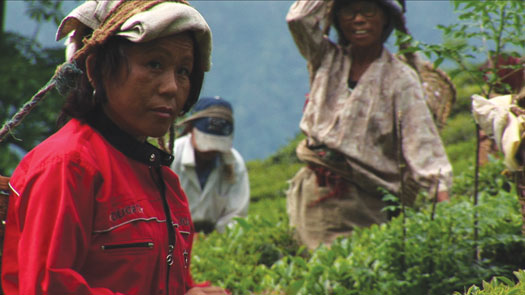
Ten years ago, I decided to make a feature length film about tea entitled The Meaning of Tea: A Tea Inspired Journey, in which I sought to channel the calm and purposeful nature of growing and drinking tea through words and images of tea growers, tasters, entrepreneurs, shopkeepers, scholars, experts, and tea aficionados in eight countries – India, Japan, Taiwan, Morocco, England, Ireland, France, and Tea, South Dakota. At its heart, the film was a journey to explore the vital forces that infuse tea with a deeper meaning, both historically and in today’s fast-paced, consumer-driven modern world. But there was another reason for making the film, which escaped my awareness until a couple years later, when I was traveling to promote the film and answering questions about filmmaking and, of course, tea itself – the desire to transform my life.
Prior to making the film, my life circumstances were such that my creative self had been severely compromised for years. I used to say that I stayed at my job, where I’d been working for almost all of my life, because it was the best-paid acting job I knew about. Additionally, I was preoccupied with aspects of my past that were producing anxiety in the present. I was left without a story I wished to talk about, and I didn’t know what I was going to do next. I needed to lay the groundwork to make a change, and it was evident that the transformation necessitated some form of “re-connection”: connecting to myself, connecting to the world at large, connecting to nature.
I chose to make a film about tea in part because of my enjoyment of oolongs from Taiwan, but in the process of making it, I gained a much deeper understanding of myself within the context of the world around me. Tea functions as a sort of global connective tissue that has the power to return us back to nature. It provides us with a profound sensation of being cradled back into the world from which we were born. It is said that when we drink tea, we drink nature. But we can only experience the forces of the natural world that swirl throughout each cup by taking tiny sips. When we savor tea in small amounts, we experience the moment-to-moment joy of being wholly alive. The same applies to everything else we do: how we drink tea is how we live our life. If we are able to stop and enjoy the precious fleeting moments in each bite and in every breath, we shift our focus to experience the subtler aspects of our inner life and our connection to nature itself.
In today’s world, big box commodities, tea included, are being consumed at an alarming rate, not with intentional sips, but in loud, grasping gulps by the container-load. Gulping tea and then demanding more is a crude denial of a deeper connection that is all too often ignored or sadly forgotten. This view may not be science-based, but tea lovers everywhere, those who sip tea slowly, know it instinctively. We humans in the Western World too often find ourselves preoccupied with wanting more. We are in danger of losing our connection to the peaceful, present moment. Even in the Far East, where reverence for tea has been cultivated for millennia, the “tea way” of life is under assault from automation. The Earth is suffering the ill effects of man-made climate change, which alter the “terroir,” the environmental factors that define the character of the very tealeaves themselves.
Reverence for how tea is grown, as well as the deliberate method of serving it, aids in the process of its enjoyment. The art of bringing tea’s flavor into the leaves and preserving the resonance of its growing environment – the weather conditions, the when and the where – are made possible only through time and careful observation. At the other end of tea’s journey, it becomes the responsibility of the person preparing the tea to gradually tease the flavor out of the leaf, mirroring the patient practice of the tea farmer. The knowledge of how tea comes into being helps to illuminate why we drink it – sip by sip.
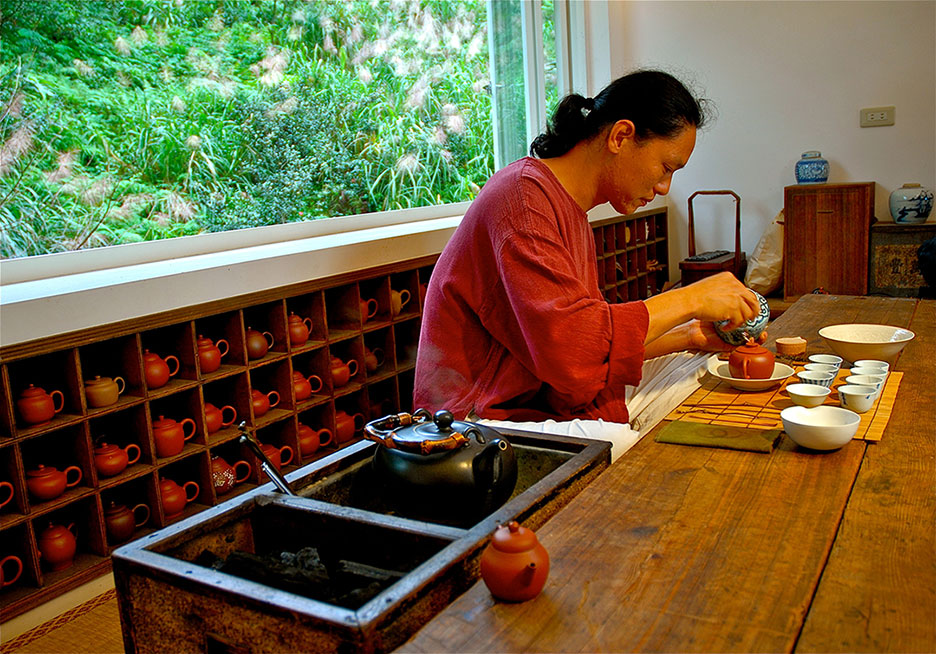
Of course, beyond that first sip we take in hopeful anticipation of the serene and occasionally blissful moment, there is a world rapidly unfolding, one that we have few words to express (except perhaps in song or in poetry). Tea helps bring acceptance by opening the gateway to peace right here, right now. Drinking tea slowly is recognizing the truth of this moment with an immediate openness to the life that’s before you. This act has a courageous quality; it’s engaged, not passive. It represents a willingness to inhabit a liberating form of presence, a “pause” in which we may find a way to respond instead of react. By arriving fully in each moment, we recognize that we cannot change the past, and by training our attention on the present moment, we can influence the unfolding of what happens next.
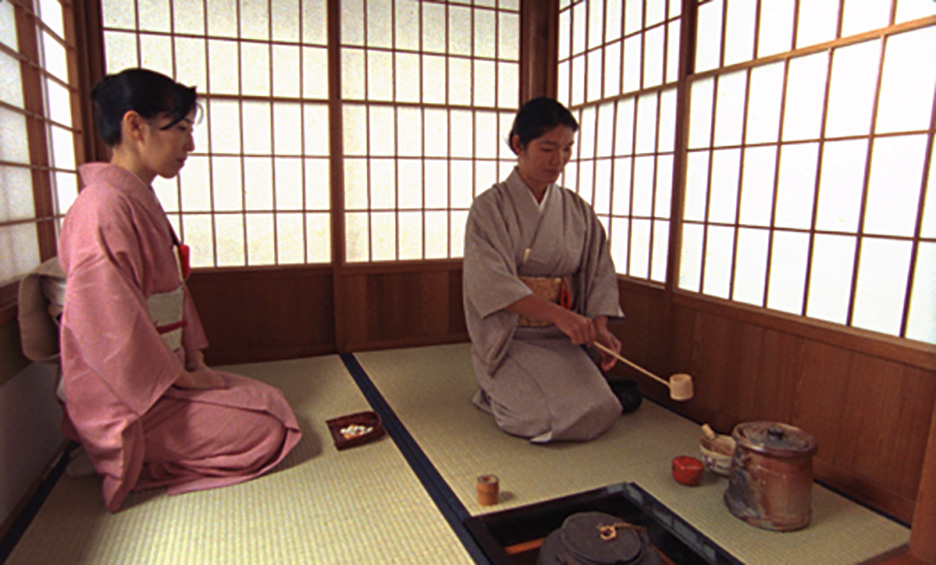
Life has meaning when we are alone, and potentially even more so when we share ourselves with tea-friends. Even in seemingly mundane places like Tea, South Dakota, where red-hatted ladies gather to imbibe teabag tea, simple conversation in an atmosphere of neighborly fun can strike a chord in this modern age of hyper-activity and wireless gadgetry. In Japan, a tea sensei described the concept of ichigo ichie — “in this lifetime we may only meet once.” Each meeting with another person comprises its own unique moment that will never occur in the exact same way again; therefore, it must be treasured.
Now, it’s my turn, dear reader, to ask you: why are you seeking to know more about tea? Is there anything that you might not yet be aware of, that is subtly guiding you toward a truer purpose? Maybe you find yourself unable to sit down and compose a symphony, or paint a masterpiece — for most, that comes as no surprise. The remedy I believe is to begin by learning to appreciate the art of the moment, perhaps by creating the stillness in which to appreciate with a fresh perspective the work of the great masters. In order to seize the courage to pick up a brush, rake a pile of leaves, or whistle a merry tune, simply wait for the kettle to boil! The art of living well is an acquired skill that’s best understood through careful observation. When we approach tea, we begin with nothingness. Rumi says, “If the soundbox is stuffed full of anything, no music. If the brain and belly are burning clean with fasting, every moment a new song comes out of the fire.”
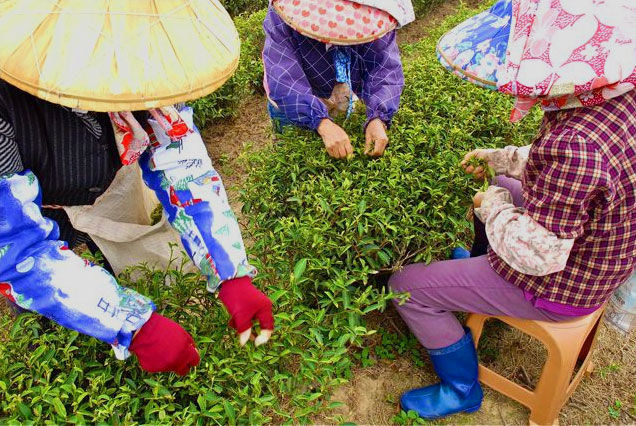
Modern technologies have the power to derail the underlying forces of human life only if we fail to live fully within each moment. If we find ourselves caught up in the turbulence of these times, do we run for the hills? Or do we sit down to quietly confer with friends about the actions we will take to transform the picture? The manner in which we drink tea in our daily practice and wholeheartedly embrace all natural forces, however great or small, is transformative in that it allows us to awaken, regardless of what is occurring outside of our control. After that, the key is to discover how we might express this deeper sentiment, however fleeting, and connect it with something greater than ourselves. Never mind the plot for a minute – more will be revealed. Making a film about tea enabled me to transform my life by small degrees, in tiny steps forward. I found that true enjoyment of tea, and of life, can best be experienced by wholeheartedly embracing the present moment, drop by drop.
Photos and Text by Scott Chamberlin Hoyt
Copyright 2018, by Scott Chamberlin Hoyt
All Rights Reserved
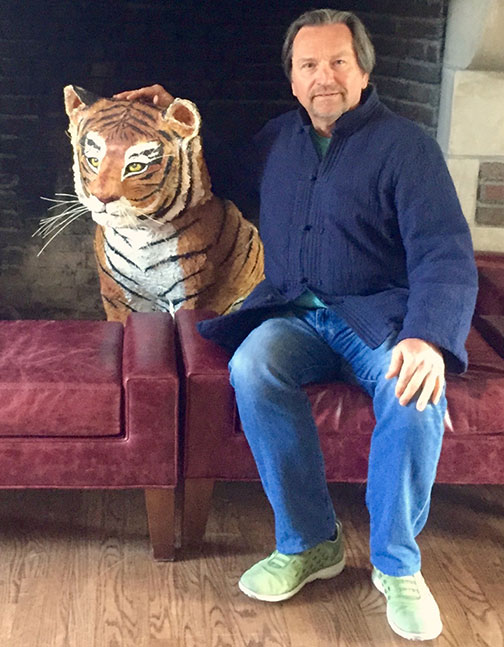
As founder of Tea Dragon Films, Scott Chamberlin Hoyt brings a wealth of business experience to a film project about a ritual he has treasured since childhood – tea. His perspective is augmented by years of travel throughout the world and deepened by decades of exploration into Eastern thought.
Tea Dragon Films has produced the acclaimed tea production, The Meaning of Tea and the companion books. You can preview the trailers for this film below